
Security Provider Due Diligence: What Do the Credentials Actually Cover?
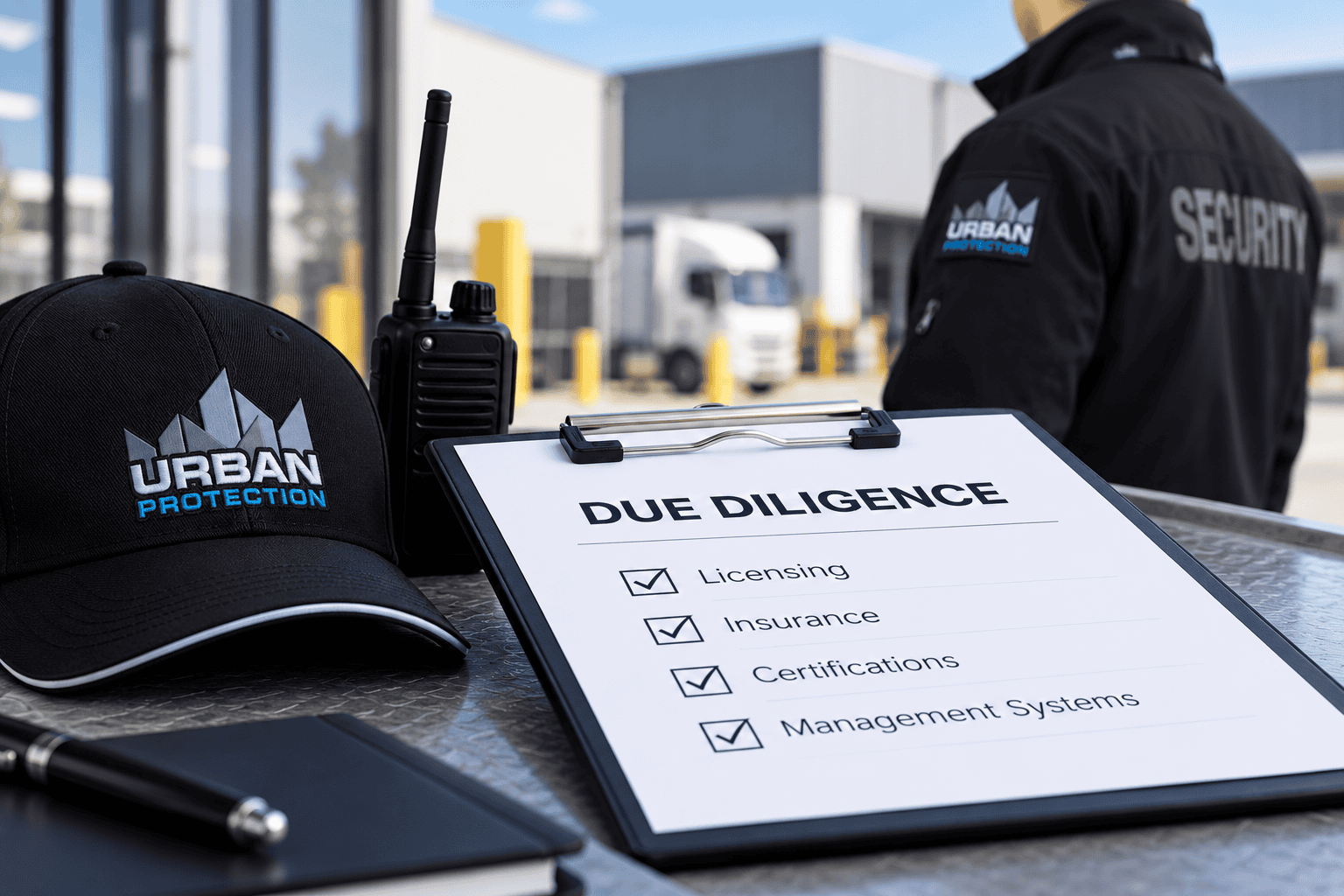
A security provider may hold the licences, insurance and certifications requested during procurement. But having these documents available does not automatically establish their relevance to every service or location.
For businesses engaging or reviewing security providers, effective due diligence involves understanding what each credential covers, not simply confirming that it exists.
Licensing: Is the Provider Authorised for the Service?
Security licensing requirements vary between Australian jurisdictions and depend on the activities being undertaken.
A provider operating across different states or territories may need to satisfy different licensing requirements.
The relevant question is whether the provider holds the appropriate authorisations for the services and locations concerned, including any applicable licence conditions.
A licence should therefore be considered in relation to the proposed assignment, rather than treated as a general indication of suitability for every security activity.
Insurance: Does the Cover Match the Work?
A certificate of currency can confirm certain details of an insurance policy at the time it is issued. However, it does not necessarily explain every condition affecting that cover.
For businesses assessing a security provider, the relevant considerations include the type of insurance, policy limits, exclusions and whether the activities being undertaken fall within the applicable coverage.
This distinction matters because holding insurance and having insurance appropriate to a particular service are not necessarily the same thing.
Certifications: What Has Actually Been Assessed?
Organisational certifications can provide useful information about a security provider’s management systems and practices.
However, the scope of a certification matters.
For example, a management-system certification may apply to specified activities, functions or locations. It should not automatically be interpreted as an independent assessment of every service or individual Security Officer.
Understanding what was assessed helps businesses interpret the assurance a certification provides without attributing more to it than its scope supports.
Looking Beyond the Documents
Alongside organisational licensing, insurance and certifications, businesses should also consider the compliance requirements of individual Security Officers.
These are separate considerations. Security Officers must hold the licences and other credentials applicable to their duties, while security providers should have appropriate arrangements to verify and monitor relevant requirements throughout their deployment.
Assessing both provides a more complete understanding of the provider’s compliance responsibilities and the personnel delivering the service.
To discuss your security requirements, contact Urban Protection Group at info@urbanprotection.com.au.