
Crisis Communication Plan: What Happens When an Incident Escalates?
During a serious incident, responding to what is happening on site is only part of the job. The right people also need accurate information so they can make decisions, coordinate assistance and support those involved.
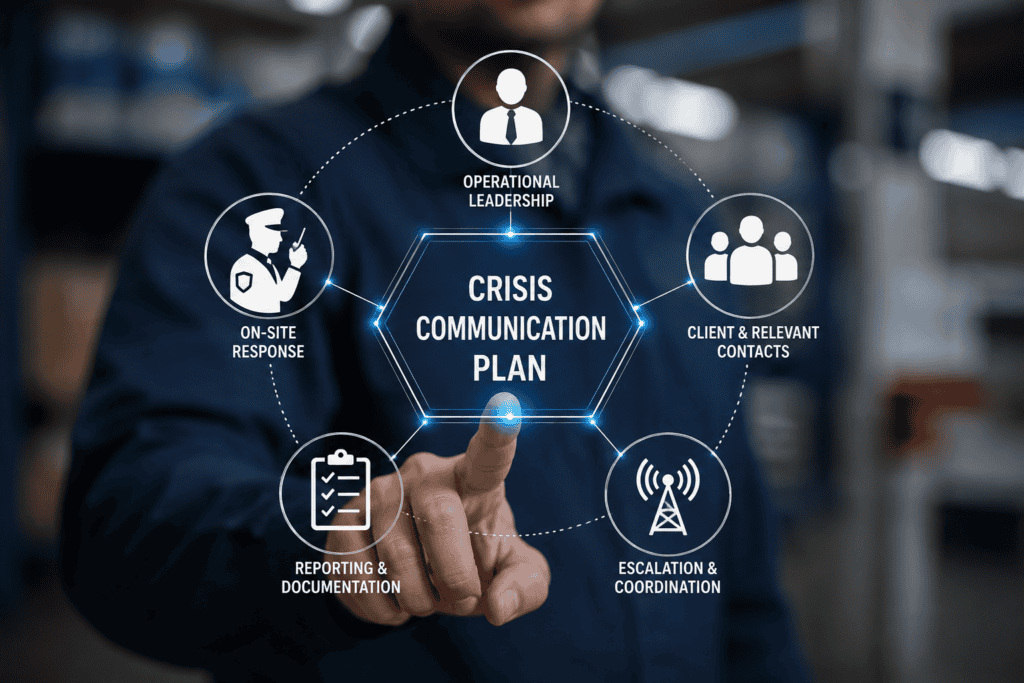
A crisis communication plan defines who needs to be contacted, what information should be communicated and who takes responsibility as the incident develops.
When There Is No Clear Crisis Communication Plan
An officer may recognise an incident and take immediate action, but the next decisions can happen quickly.
Who needs to be contacted? When should the incident be escalated? Who updates the client? Who communicates with emergency services? What information needs to be recorded?
Without established procedures, officers may be left making these decisions under pressure. Information can be delayed, responsibilities can become unclear and unverified details can be passed between people involved in the response.
The consequences can extend beyond the incident itself. Inaccurate or delayed communication can leave clients, site teams and other people involved without a clear understanding of what has happened or what happens next.
ASIAL reinforces this point: organisations need practical response plans that define roles, responsibilities and communication before a crisis occurs. The source also stresses communicating verified facts rather than speculation when information is still developing.
Giving Officers a Clear Path to Follow
At Urban Protection Group, we support our officers through established reporting and escalation procedures, site-specific instructions, emergency response plans, training and access to operational leadership.
When a significant incident occurs, officers know how to:
- take immediate action within their training
- contact emergency services where required
- escalate the incident through established channels
- provide verified information to relevant client contacts
- record actions and updates as the incident develops
- continue reporting through to handover or resolution
These procedures give officers clear actions to follow while operational leadership manages the communication and decisions that require escalation.
What This Looks Like in Real Life
During a medical emergency, a Security Officer recognised that a fellow team member required urgent assistance and administered first aid while emergency services were contacted.
The Account Manager attended the site, coordinated communication with those involved, supported the officer’s family, travelled to the hospital and remained involved until appropriate arrangements had been made.
Emergency services took responsibility for medical care. Our team continued with the communication, escalation and welfare support required around the incident.
The officer responding on site wasn’t left to manage the situation alone.
What Clients Should Expect
When reviewing security arrangements, it is worth considering what happens beyond the officer’s immediate response.
A well-prepared security operation should provide:
- clear escalation pathways
- access to operational leadership
- verified incident reporting
- defined communication responsibilities
- documented follow-through
These arrangements should already be established before they’re needed.
A crisis communication plan helps ensure officers know who to contact, clients receive verified information, and operational leaders can take responsibility when an incident requires escalation.
Review how communication and escalation are addressed within your current security arrangements. Discover how Urban Protection Group supports organisations through structured emergency response and operational support. Contact us now.