
What Property Managers Should Be Paying Attention To
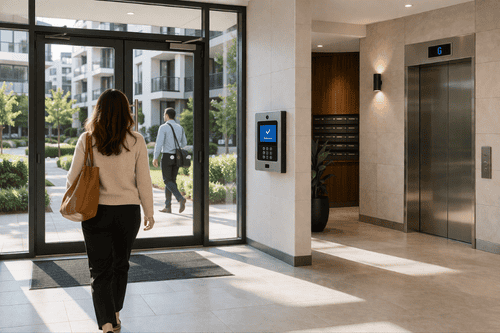
Strata living has become increasingly common across Australia, particularly in major cities where apartment buildings and residential complexes continue to grow. With more residents sharing common spaces such as lobbies, car parks and lifts, strata building security has become an important consideration for property managers and owners corporations.
For many strata managers, security concerns do not always appear as major incidents. More often, they emerge through small operational issues such as delivery access, resident complaints, unusual activity in common areas or uncertainty about who has access to the building.
While many residential buildings rely on measures such as CCTV systems and access control, these tools alone may not always address the day-to-day security challenges that arise in shared environments.
Maintaining strata building security is not just about preventing external threats. It is also about managing risk, maintaining residents’ confidence and ensuring that building access is properly controlled.
Understanding how people move through a building — and where vulnerabilities may exist — helps property managers identify risks before they escalate into larger incidents.
Below are some of the common concerns strata managers encounter, along with several security blind spots that can sometimes go unnoticed until problems arise.
Why Strata Building Security Requires a Different Approach in Residential Buildings
Unlike standalone residential homes, strata properties involve shared access and shared responsibility.
Residents, visitors, contractors, delivery drivers and building staff may all pass through the same entry points on a daily basis. This constant movement can make it difficult to maintain visibility over who enters the building and when.
For strata managers, this creates several practical challenges, including:
- controlling access to common areas
- managing security complaints from residents
- ensuring building policies are followed
- responding to incidents that occur after hours
Without a proactive approach to strata building security, small vulnerabilities can gradually develop into larger risks that affect both residents and building management.
Why Strata Building Security Requires a Different Approach in Residential Buildings
Unlike standalone residential homes, strata properties involve shared access and shared responsibility.
Residents, visitors, contractors, delivery drivers and building staff may all pass through the same entry points on a daily basis. This constant movement can make it difficult to maintain visibility over who enters the building and when.
For strata managers, this creates several practical challenges, including:
- controlling access to common areas
- managing security complaints from residents
- ensuring building policies are followed
- responding to incidents that occur after hours
Without a proactive approach to strata building security, small vulnerabilities can gradually develop into larger risks that affect both residents and building management.
Security Risks Strata Managers Regularly Encounter
Many strata managers are familiar with some of the more visible security concerns that arise in residential buildings.
These issues often become apparent when residents report incidents or raise concerns with the owners corporation.
Tailgating at Entry Points
Tailgating occurs when an unauthorised person follows a resident through a secure door or garage entry without using their own access credentials.
In busy buildings, residents sometimes hold doors open for others without realising the security implications. Over time, this behaviour can undermine the purpose of controlled access systems.
Parcel Theft in Shared Areas
Online shopping has significantly increased parcel deliveries to residential buildings. When packages are left unattended in mailrooms or lobbies, they can become vulnerable to theft.
In larger complexes with high delivery volumes, parcel security is now a common concern for strata managers and residents alike.
Contractor and Service Access
Cleaning crews, maintenance contractors and tradespeople regularly access residential buildings to perform essential work.
Without clear procedures for managing contractor entry, it may be difficult to track who is onsite and whether restricted areas are accessed appropriately.
Hidden Security Blind Spots in Strata Buildings
While the issues above are widely recognised, some of the most significant strata building security risks are less visible.
These blind spots often develop gradually and may only become apparent after an incident occurs.
Access Credentials That Are Never Deactivated
When residents move out of a building, access cards, key fobs or garage remotes may not always be deactivated immediately.
Over time, this can result in former residents retaining active access to the property.
For strata managers overseeing buildings with frequent tenant turnover, reviewing access credentials periodically can help ensure that only authorised individuals can enter the building.
Uncontrolled Delivery and Visitor Access
Delivery drivers and visitors may enter residential buildings multiple times each day. In some cases, doors are temporarily propped open or residents allow access without confirming who is entering.
Although these actions may appear harmless, they can gradually weaken building access control and reduce the effectiveness of security systems.
Clear visitor management procedures can help property managers maintain better oversight of building access.
Loitering in Common Areas
Strata managers may occasionally receive reports of unfamiliar individuals spending extended periods in building lobbies, car parks or shared facilities.
While loitering does not necessarily indicate criminal intent, it can sometimes suggest that individuals are observing building activity or testing access points.
Ensuring that common areas are well monitored and encouraging residents to report unusual behaviour can help deter this type of activity.
CCTV Systems That Are Not Actively Monitored
Many residential buildings rely heavily on CCTV cameras as their primary security measure.
However, cameras typically record incidents rather than prevent them. If footage is only reviewed after a problem occurs, opportunities to deter suspicious behaviour may already have passed.
CCTV systems are most effective when combined with proactive oversight and structured incident reporting processes.
You can learn more about privacy considerations in our article on CCTV privacy in NSW strata buildings.
Basement Car Parks: A Common Entry Point for Security Breaches
Basement car parks are often one of the most vulnerable areas in residential buildings.
Because they provide direct access to lifts and stairwells, unauthorised individuals who enter through the garage may gain access to other parts of the property.
Common vulnerabilities in basement areas include:
- garage doors remaining open longer than necessary
- vehicles following each other into the car park
- unsecured pedestrian access points
- poor lighting in basement areas
Improving car park monitoring and lighting can significantly strengthen strata building security throughout the entire property.
The Growing Complexity of Modern Strata Buildings
Modern residential buildings are also becoming more complex, which introduces additional security considerations.
Many newer developments now include shared facilities such as parcel rooms, gyms, rooftop areas, co-working spaces and electric vehicle charging stations. While these amenities provide convenience for residents, they also create additional access points and areas that require monitoring.
In buildings with high resident turnover or frequent visitor traffic, maintaining consistent oversight of these spaces can become challenging. As residential developments continue to evolve, strata managers are increasingly required to think about strata building security as part of overall building operations rather than relying solely on individual security systems.
Why Strata Managers Also Think About Risk and Liability
Beyond physical security concerns, strata managers must also consider the broader implications of security incidents.
If theft, vandalism or unauthorised entry occurs within the building, residents may question whether reasonable security measures were in place.
Under the NSW Strata Schemes Management Act, owners corporations are responsible for maintaining common property and ensuring it is reasonably safe for residents and visitors.
For this reason, many strata managers focus on identifying security risks early and maintaining clear processes that help support a safe residential environment.
Strengthening Security in Strata Buildings
Improving strata building security does not necessarily require complex solutions. In many cases, practical improvements can significantly reduce risk.
Some steps property managers may consider include:
- conducting periodic security reviews of the property
- ensuring access credentials are regularly updated
- improving lighting in common areas and basement car parks
- reviewing CCTV placement and coverage
- establishing clear visitor and contractor access procedures
In larger residential complexes, professional security services such as trained concierge officers or mobile patrols can also provide consistent monitoring and structured incident reporting that support strata building security across the property.
Supporting Safer Residential Communities
As residential developments continue to grow in size and complexity, maintaining strata building security is becoming an increasingly important part of property management.
For strata managers, maintaining a safe environment involves more than installing cameras or access systems. It requires ongoing attention to how residents, visitors and contractors move through the building and how potential vulnerabilities are addressed.
By identifying security gaps early and implementing practical measures, strata communities can create safer living environments while maintaining confidence among residents and property owners. Contact us below.